
As a chiropractor, I get many questions about sleep positions, “What’s the best position for sleeping?”, or comments like, ” I used to sleep on my side, but I heard it was better to sleep on my back, so I’ve switched it now.” Everyone wants to choose the best position, and some people are even willing to put in some work to achieve that. So let me help you get the most out of your efforts to be ergonomically correct with your sleep postures.
I’m going to start with some basic principles, because then, you won’t need an exact answer to your own pressing questions about sleep position, you will have the tools to start figuring it our for yourself. And we are here to provide feedback and to offer suggestions so that you can create optimally comfortable and health promoting sleep positions specific to your needs.
Sleep Posture Principles:
1. No single position is great when you’re stationary for hours. No matter how “Perfect” the position may seem, staying there for long is no better than prolonged sitting, or even standing. To that end, it’s best to rotate between 2 or more positions throughout the night. Every position will create stress somewhere, a pressure point between you and the bed, or cause something to be stretched or pinched. By moving every once in a while, you will minimize the problems associated with any one, single position.
2. Always strive to maintain a “Neutral” posture. Draw from what you recognize to be great standing posture and mimic that. And think in all 3 physical dimensions. This means keeping the natural lordotic curves of your neck and low back, and the kyphotic curves of your thorax and sacrum, as well as not introducing compromising twists and bends.
- If you’re on your side, you can have your hips and knees flexed, but DON’T round your back, tuck your chin or bring your head forward… again, think good standing or sitting posture. This is aided by a properly sized and fitted neck pillow and the use of a body pillow that will support your upper arm and continue between your legs down to your ankles. This supports your legs and knees stacked and parallel, which is really important to keep your pelvis and low back from twisting.
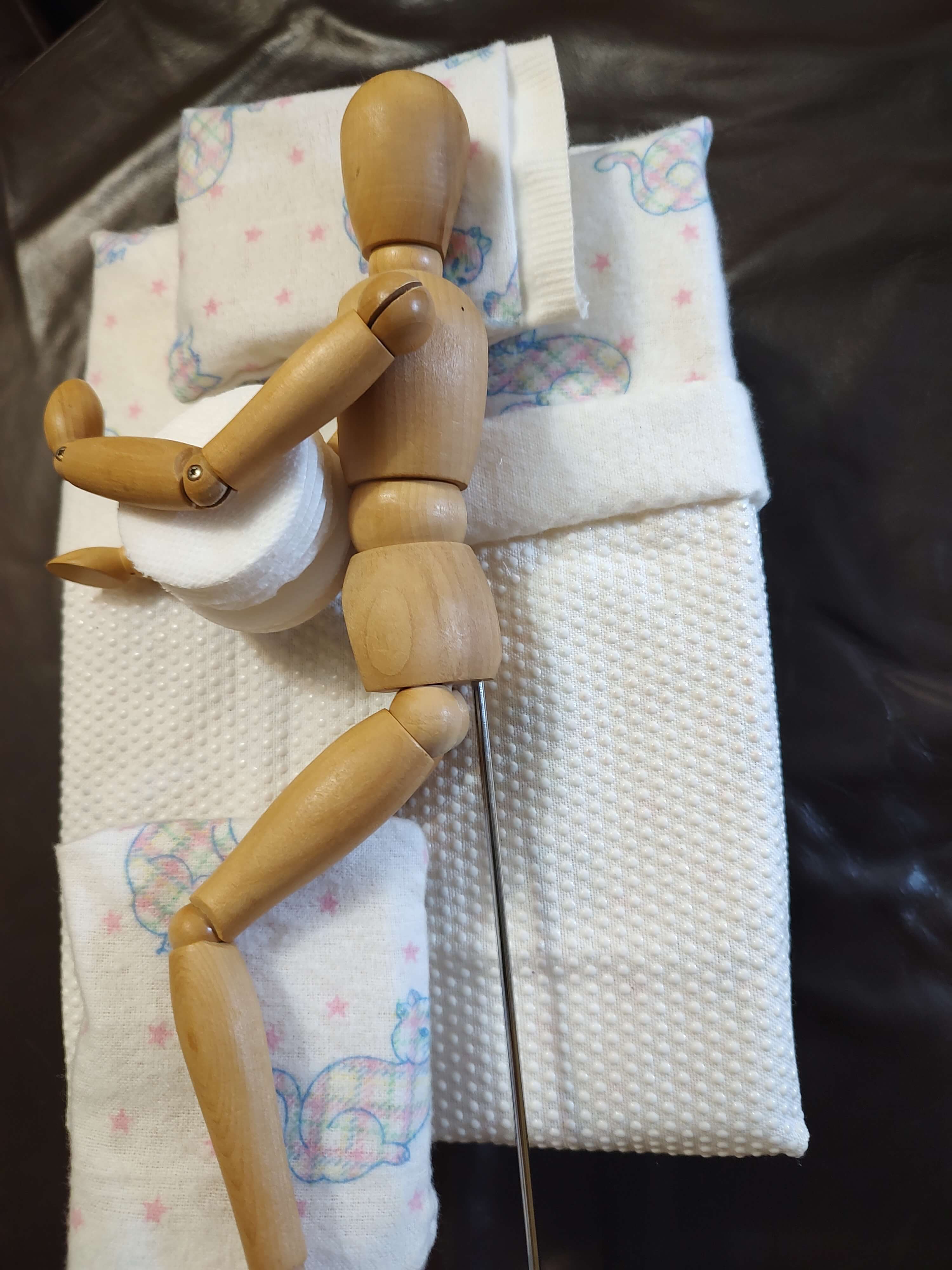
Great Side Lying Positioning
- If you are on your back, very little pillow is needed under your neck and almost nothing under your head. To keep the normal curves in your back, it helps to have the knees and lower legs (as far down as the ankles) supported.
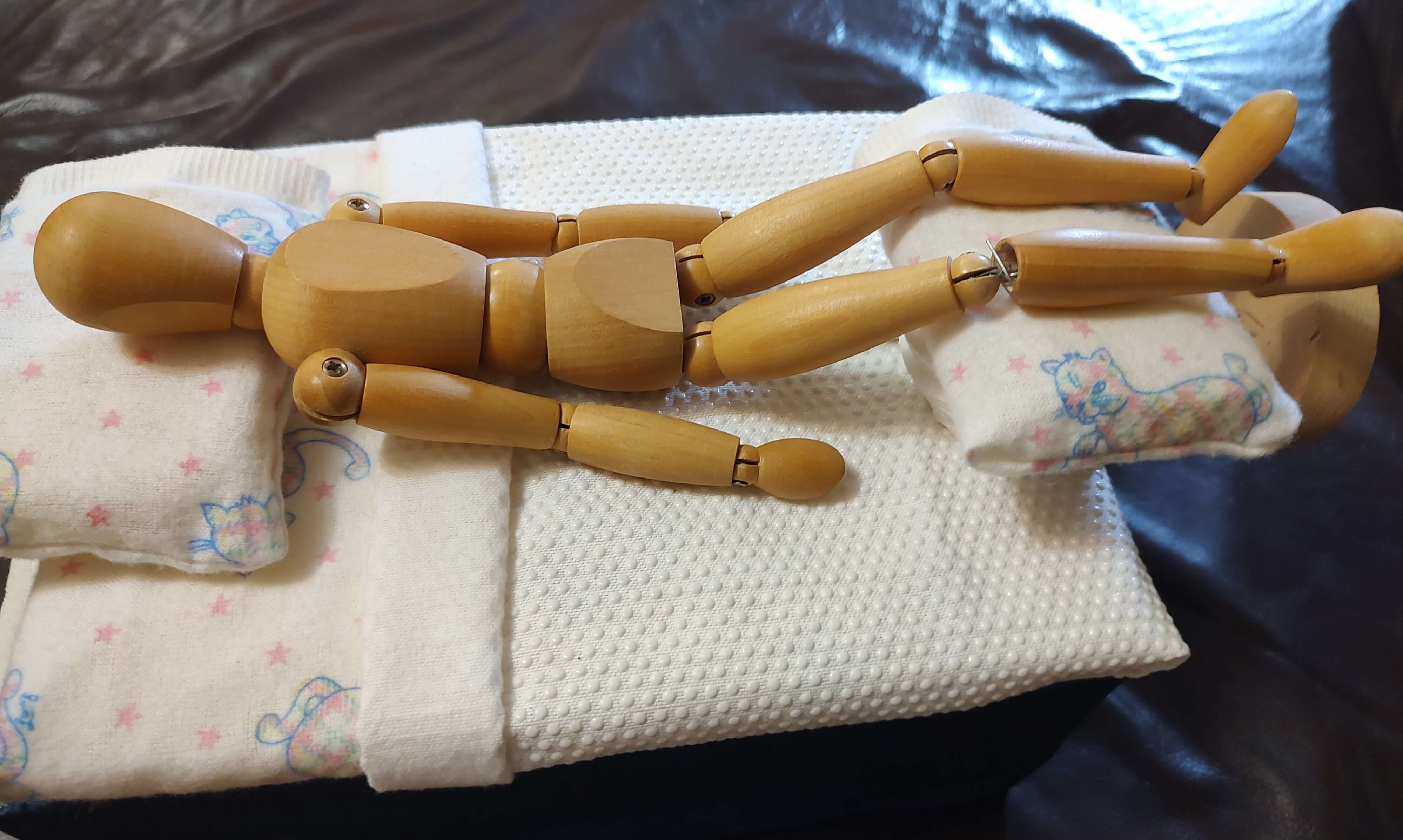
Legs Supported While Lying On Back.
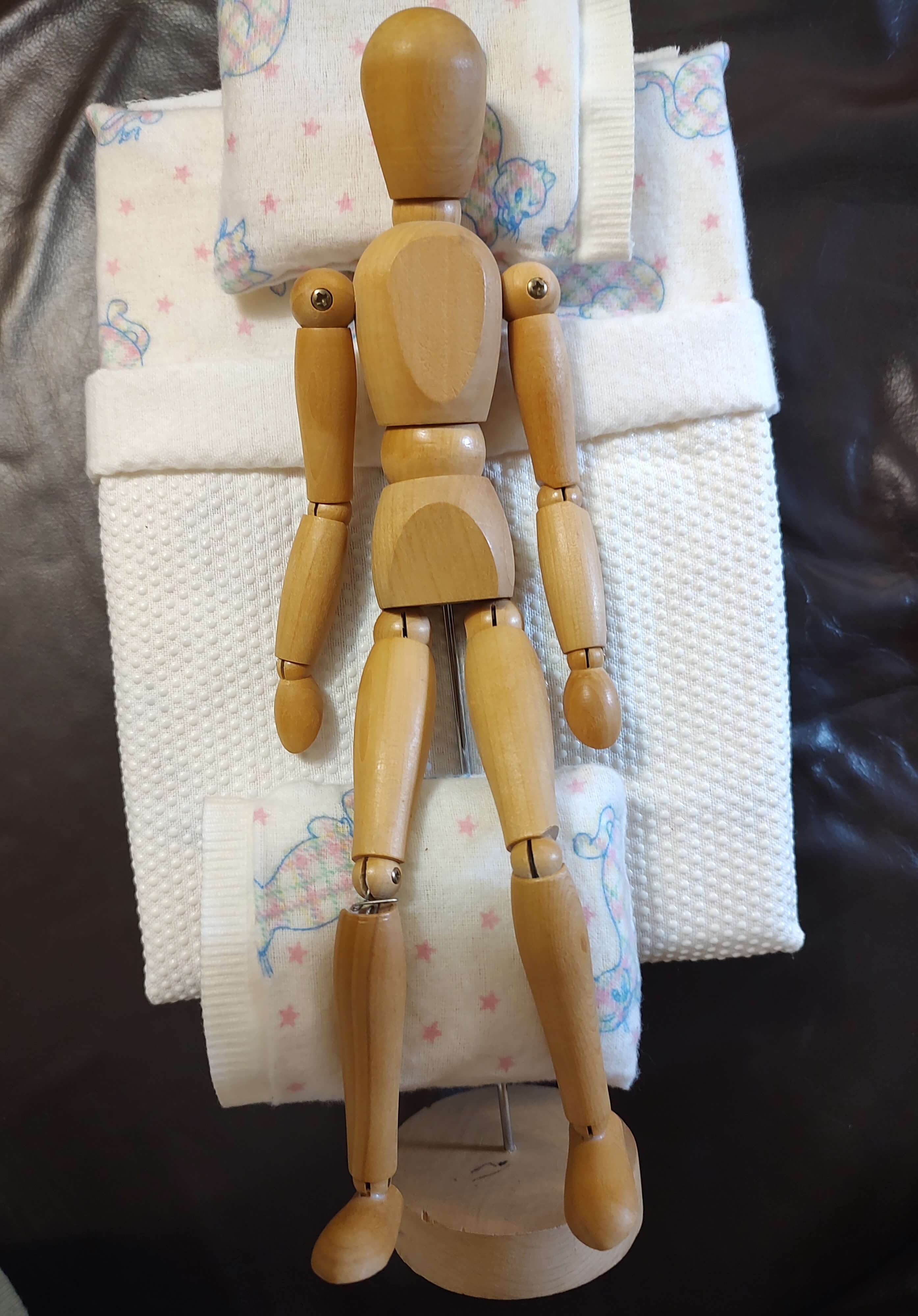
Example of Lying on Back.
3. It is a good plan to find ways to be comfortable on either side and on your back, but sometimes one position dominates, and that’s OK. There will be times, due to injuries, illness/congestion, when one or more positions may not be appropriate. It’s nice to have a comfortable alternative available.
4. Normal and healthy postures CANNOT be achieved while laying on your stomach. Unless you have a specially designed bed with a hole for you to lay your face down, not requiring you to turn your neck, laying face down is highly compromising to your spinal cord and brain stem, not to mention muscles and soft tissue everywhere.
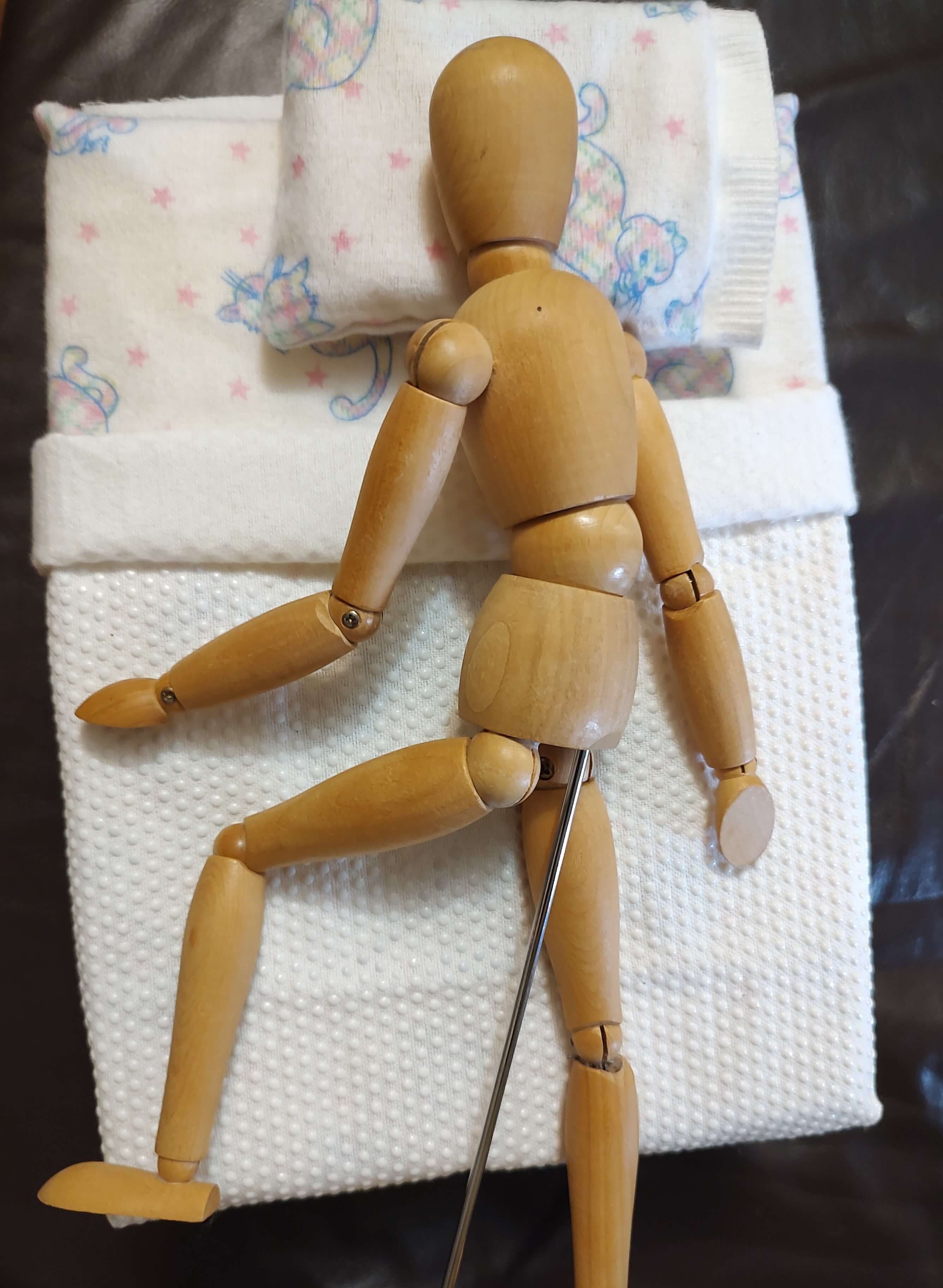
YIKES… Don’t do this!
This is a start to understanding how to create healthy sleeping positions that will add to your quality of life, not detract from it, allowing you to rise every day with your maximal energy, mobility and clear mind.
Get Started Today
If you would like our help putting this into action, let us know. In addition to great chiropractic care, expert adjusting, trouble shooting to enhance your lifestyle and bringing your attention to unnecessary stressors, we can size you for your most compatible pillow (Canadian made, with no off-gassing) and help you through the transitions of optimizing your sleep for a better tomorrow.